
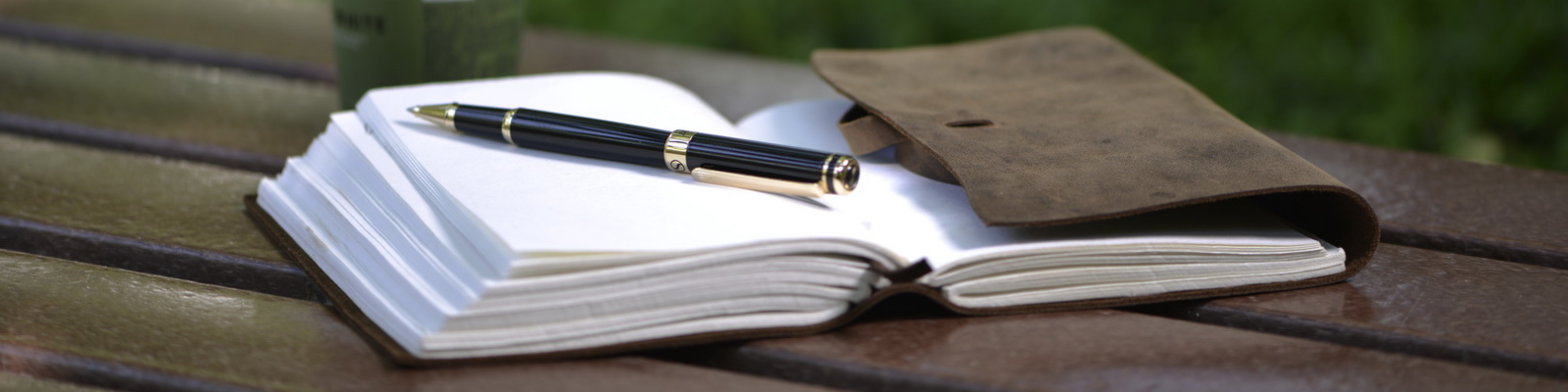
Three new journaling approaches to try when nothing works
As a new year begins, many people return to journaling with genuine intention. A new notebook is opened. A pen is chosen carefully. The idea is sound.
And yet, a few weeks later, the pages often remain blank.
This is not a failure of discipline. More often, it is a failure of approach.
In a recent article, we explored how journaling can become a lasting habit when supported by a clear, science-backed framework. Attentive readers will have recognised the influence of James Clear’s work on habit formation, distilled into four simple laws:
- Make it Obvious
- Make it Attractive
- Make it Easy
- Make it Satisfying
Today, we focus on the third law — make it easy — and explore three journaling approaches designed for moments when nothing seems to work.

Low-friction journaling refers to journaling approaches designed to minimise emotional, cognitive, and practical resistance to writing. Rather than aiming for insight or eloquence, these methods prioritise ease of entry, allowing the habit to continue even on days when motivation, clarity, or energy is low.
Why journaling feels harder than it should
For most people, the difficulty is not the act of writing itself, but the pressure surrounding it. An empty page quietly demands insight, emotional clarity, or something meaningful enough to be worth recording.
That expectation is precisely what causes resistance.
If journaling is to become part of daily life, it must first become unthreatening. These three approaches remove the pressure to perform and replace it with simplicity, structure, and permission to begin where you are.
If the Gratitude Journal feels forced: try the 2T2W method
Gratitude journaling is widely recommended for good reason. It trains the mind to notice neutral-positive and positive moments that would otherwise pass unnoticed. Over time, this shift in attention can subtly change how we experience our days.
But gratitude can also raise difficult questions: grateful for what, exactly? And to whom Rather than wrestle with abstraction, the 2T2W method — Things That Went Well — offers a grounded alternative.
At the end of the day, list anything that went well. Nothing more.
- a good breakfast
- a task finished on time
- a compliment received
- a peaceful lunch in the park between meetings
- a new pen that looks beautiful
Small moments count. Ordinary moments count.
After a few weeks, many people notice something unexpected: their days have not changed, but their attention has. More good reveals itself — without effort or optimism, simply through observation.
If Morning Pages feel daunting: try a Stoic journal
Stoicism is often misunderstood as emotional suppression. In truth, it is a philosophy rooted in self-awareness, restraint, compassion, and a calm acceptance of uncertainty.
Marcus Aurelius, Roman Emperor and philosopher, wrote his Meditations not for publication, but as private journal notes. He lived through war, political instability, economic strain, and personal loss — all while carrying the responsibility of an empire. His reflections endure because they address conditions that have never truly changed.
If writing freely in the morning feels intimidating, a Stoic journal offers structure. Instead of beginning with yourself, begin with a thought that has already stood the test of time.
Read a short passage from Meditations, or a letter from Seneca to Lucilius. Then write your response. Agreement is not required. Clarity is not required. Only engagement.
Many are surprised to discover how much they recognise themselves in the words of an ancient Roman emperor. The distance of centuries often makes personal reflection feel safer — and easier.
If the Reflection journal feels heavy: try the Logbook journal
Some days, even gratitude feels like an effort. Emotions are flat. Thoughts are scattered. The idea of insight is exhausting. On such days, journaling does not need to involve reflection at all.
The Logbook journal is simple record-keeping. You write only what happened — without judgement, interpretation, or emotional commentary.
- woke at 7:10
- missed the bus
- emails and meetings
- pasta for lunch
- walked home
- read before bed
No adjectives. No conclusions. Just facts.
This approach works because it removes the hidden demand to understand yourself. Over time, patterns begin to emerge naturally. Meaning appears later — often when you are not looking for it. For maintaining a habit, this is one of the most effective forms of journaling. It honours the principle of making it easy — and keeps the practice alive when motivation disappears.
When simplicity becomes the point
Journaling does not fail because we are inconsistent. It fails because we ask too much of it, too soon. Whether you choose to notice what went well, reflect alongside ancient thinkers, or simply log the facts of your day, the goal is the same: to lower the threshold of entry.
A journal does not need brilliance. It needs continuity.
And sometimes, the quiet act of showing up — pen to paper, without expectation — is enough to begin again.

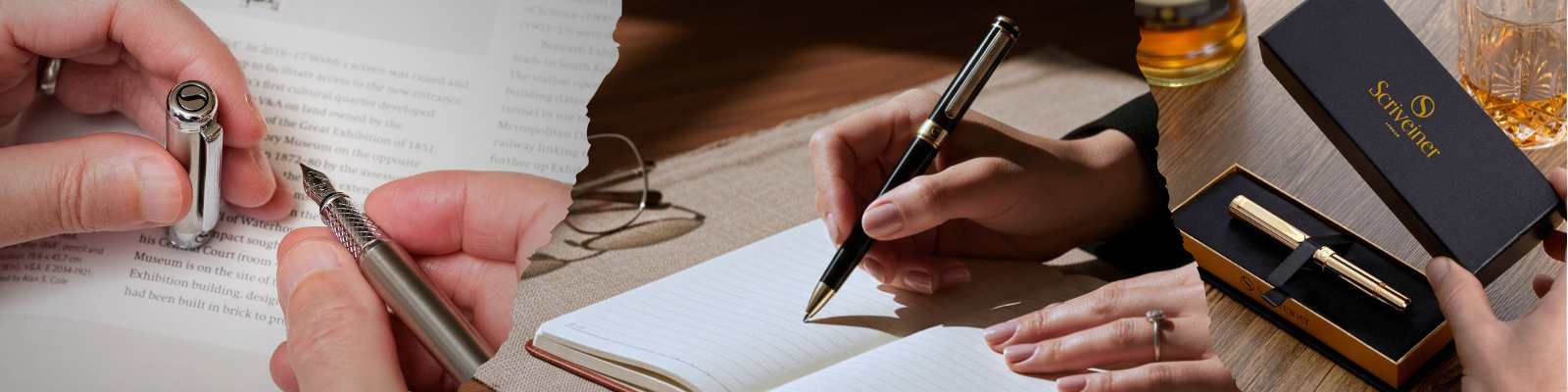
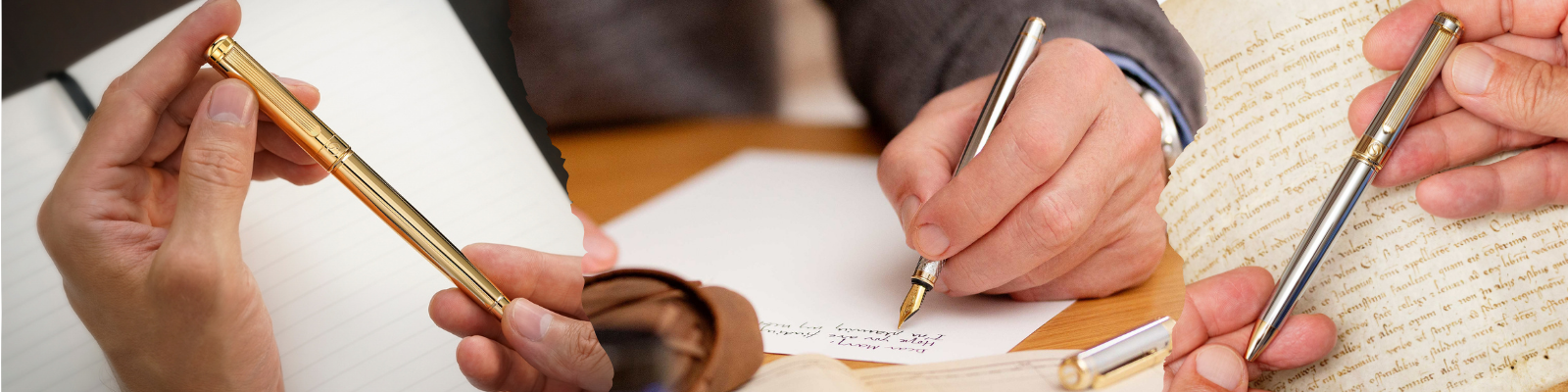
Sometimes, the simplest encouragement comes from what is already within reach. A pen that feels balanced in the hand, a notebook chosen with care, resting quietly on the desk — these small, intentional objects invite pause. When writing is pleasurable in itself, journaling no longer asks for effort or resolve. It becomes a moment you are gently drawn towards: a few minutes at the end of the day, pen to paper, without expectation. Over time, this ritual is often what allows the habit to take root.

Hinterlasse einen Kommentar
Diese Website ist durch hCaptcha geschützt und es gelten die allgemeinen Geschäftsbedingungen und Datenschutzbestimmungen von hCaptcha.